

DLC-Coated Piston Rings: Lower Friction, Longer Engine Life

01 The Problem at the Top Ring
Emission and CO₂ rules keep tightening — Euro 7 applies to new light-vehicle type approvals from November 2026, with EPA Tier 3 / EPA 2027, China 6 and comparable regulations pushing engines the same way: smaller displacement, higher boosting, higher peak pressure, and no room left in the friction budget.
The ring pack is commonly estimated at around one fifth of total engine friction, and the first compression ring carries the worst of it: combustion gas directly loaded on its running face, temperatures above 200 ℃, an oil film only micrometres thick. Hard chrome, nitriding and chrome-based ceramic coatings have handled this duty for decades — but they trade hardness against friction. DLC (diamond-like carbon) removes the trade-off.
|
1,500–2,500 HV typical DLC hardness |
≈0.15 friction coefficient, boundary lubrication |
2–4 µm typical coating thickness |
Top ring first position to be coated |
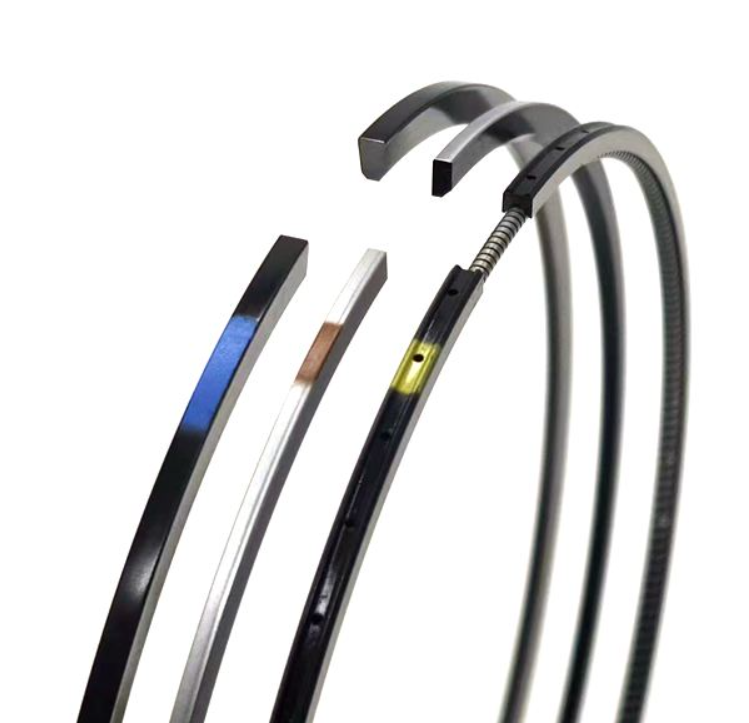
Fig. 1 — A complete ring set: compression rings, scraper ring and spring-expanded oil ring.
02 What DLC Is
DLC — Diamond-Like Carbon — is a thin film of amorphous carbon deposited on the workpiece surface in a vacuum coating process, PVD or PACVD.
In plain words: a diamond-hard, low-friction carbon layer, only micrometres thick, grown directly on the ring face.
|
Property |
Typical behaviour on a piston ring |
|
Hardness |
1,500–2,500 HV (sp³-dependent) — vs ≈900 HV hard chrome, ≈1,100 HV nitrided steel |
|
Friction |
0.05–0.15 against steel depending on variant and conditions; below chrome-based coatings in boundary lubrication |
|
Scuff resistance |
Chemically inert; resists scuffing under boundary lubrication and high temperature |
03 How the Coating Is Built
DLC is never used on its own. It is the top of a stack in which every layer has a job (Fig. 2):
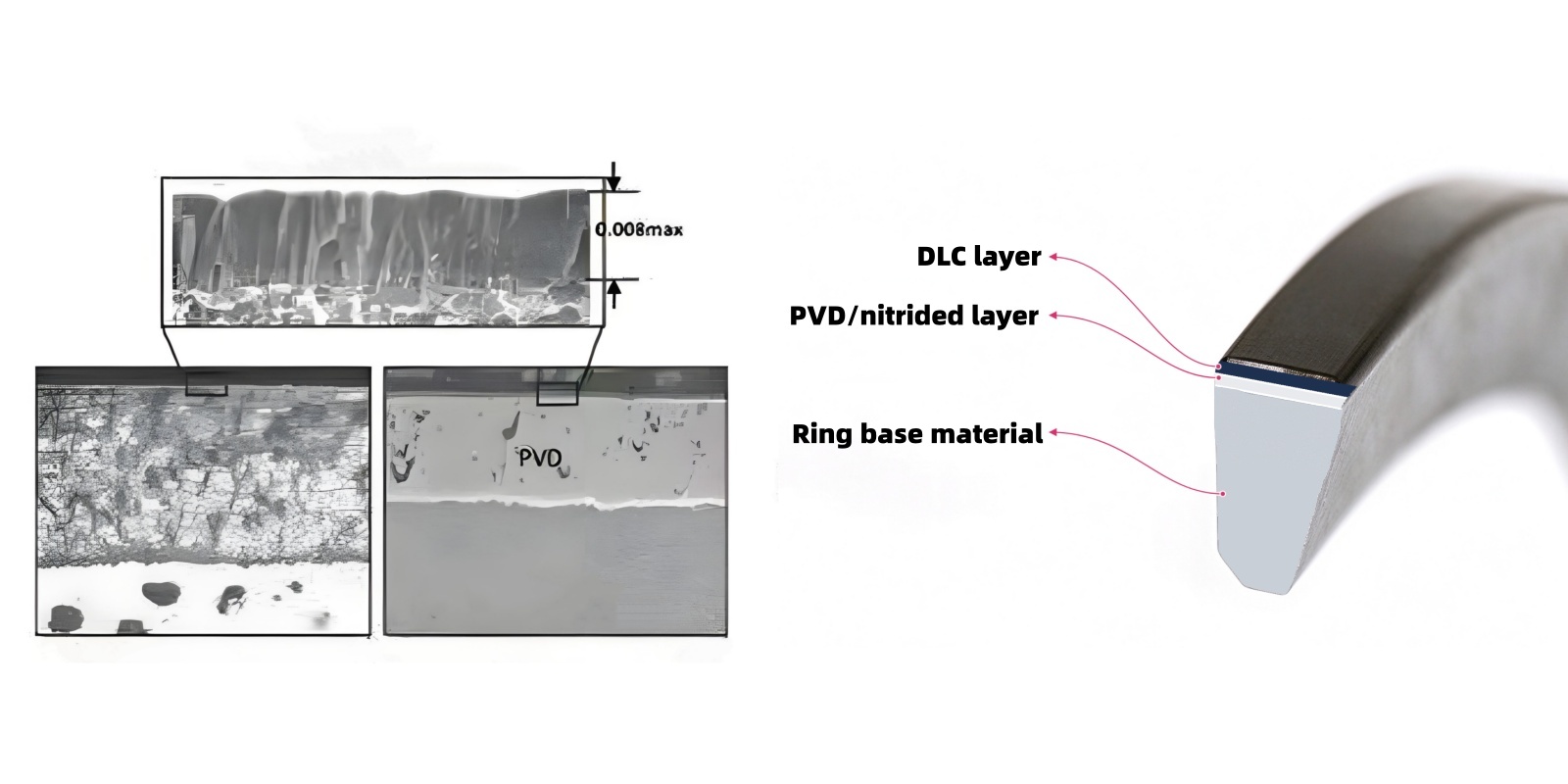
Fig. 2 — Cross-section of a DLC-coated top ring. Layer thicknesses exaggerated.
low friction at the contact, a hardened foundation beneath it, and a steel base that carries the load.
04 What DLC Does
Benefit 1 — High hardness and low friction
With 1,500–2,500 HV at the running face, DLC holds its geometry where chrome films wear away — and its low friction cuts the ring's share of the engine's mechanical losses.
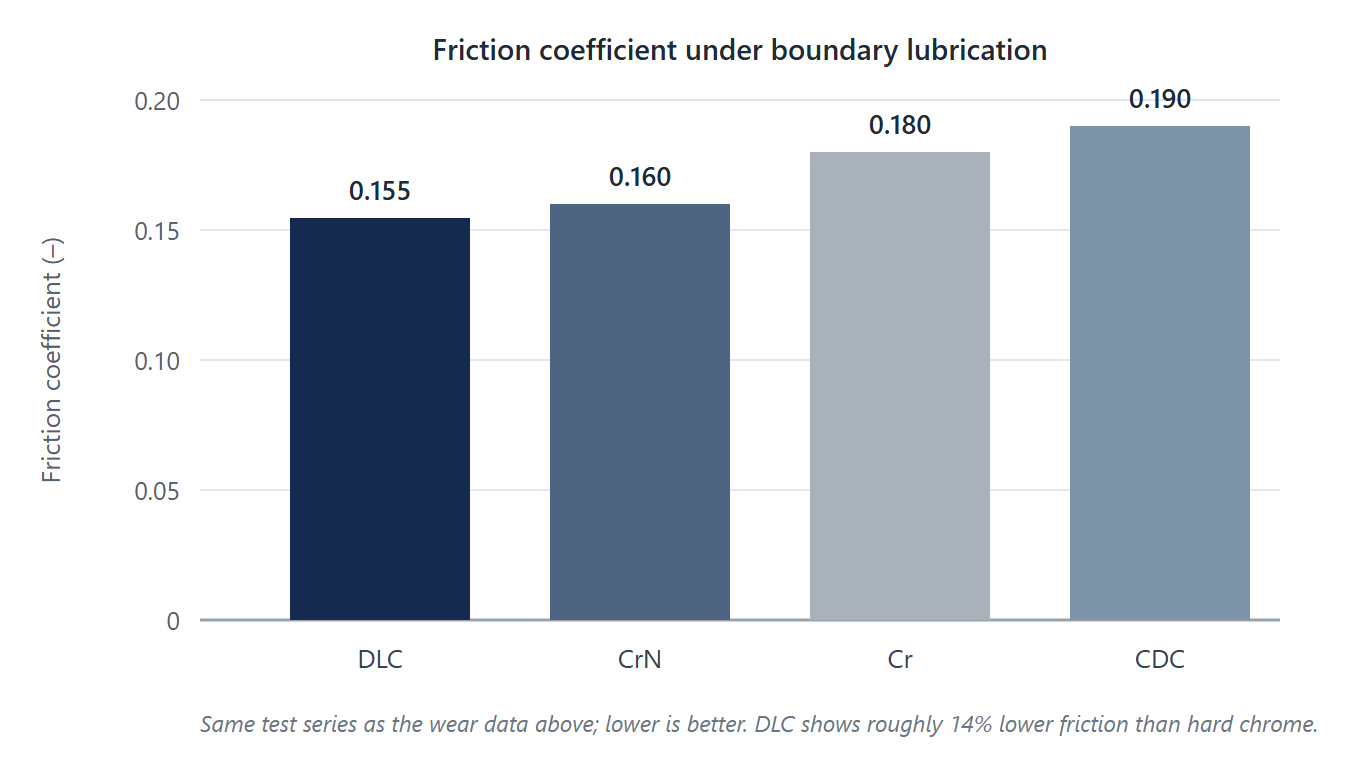
Fig. 4 — Friction coefficient: DLC 0.155 versus 0.180 for hard chrome.
Benefit 2 — Lower oil consumption
A stable, low-wear face keeps the ring's contact geometry true over the service life, holding oil consumption and ash loading down — protecting the DPF/GPF and catalysts that emission rules now monitor on the road.
Benefit 3 — High scuff resistance
The carbon film is chemically inert and keeps its low-friction surface even when the oil film thins out at high temperature — widening the scuff margin of downsized, highly boosted engines over longer service intervals.
In a representative boundary-lubrication bench series, DLC gave the lowest ring wear of the four coating systems tested — roughly one fifth of hard chrome — and the lowest cylinder liner wear as well, about 18% below chrome. The same series shows the lowest friction coefficient, about 14% below hard chrome (Fig. 5).
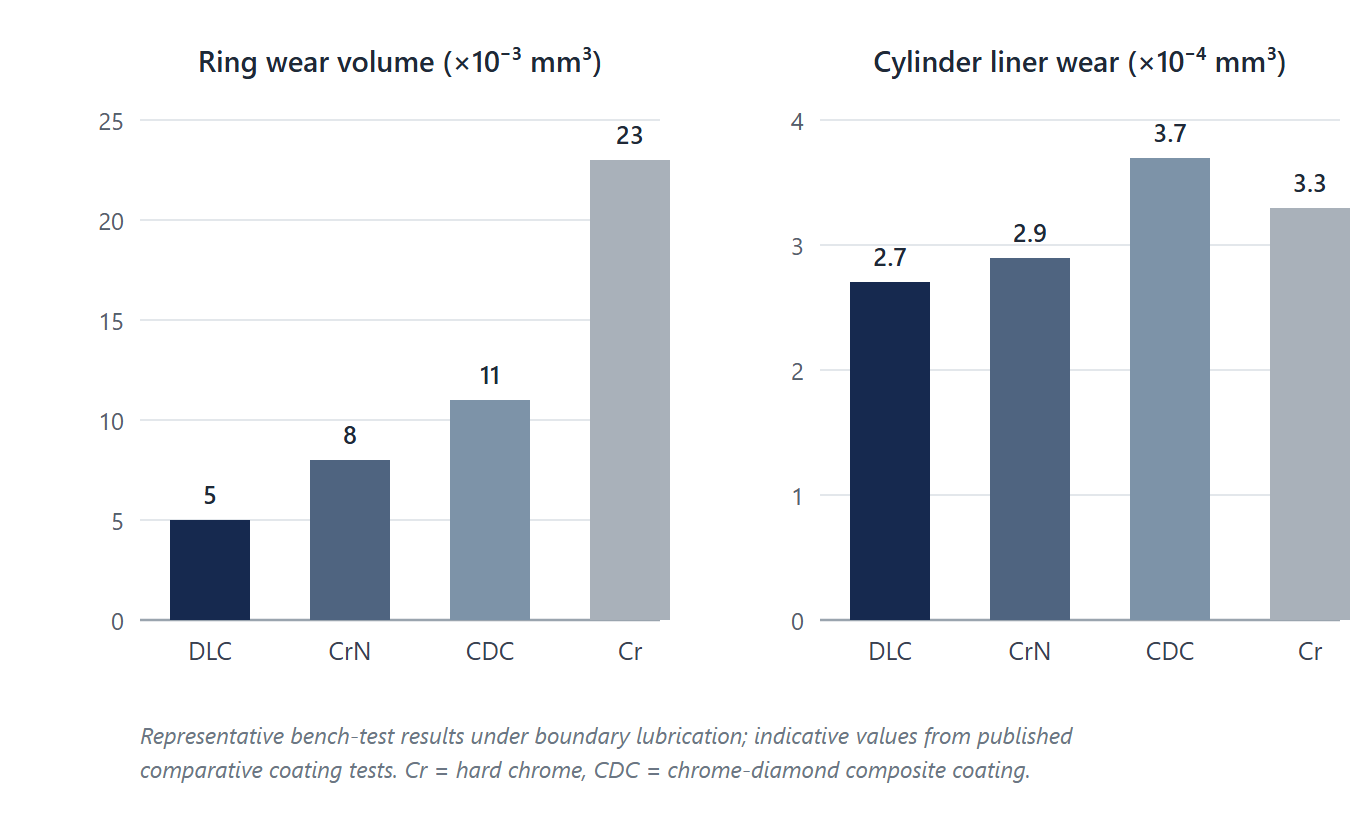
Fig. 5 — Wear under boundary lubrication: lowest on both ring and liner with DLC.
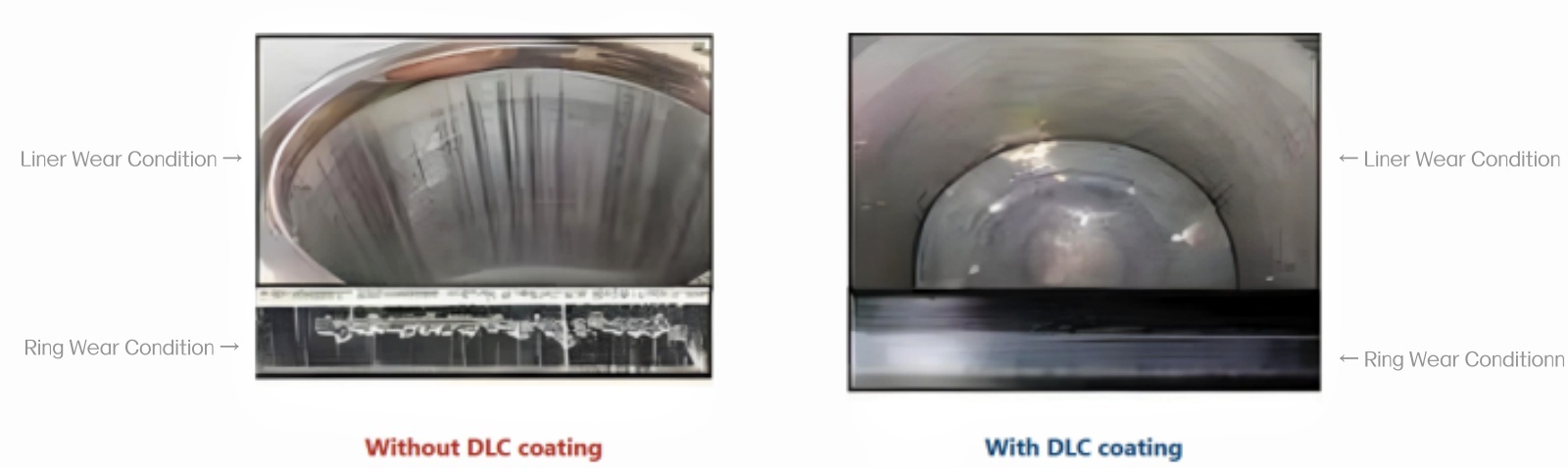
Fig. 6 — piston ring and liner: without DLC (left) and with DLC (right).
05 Bottom Line
DLC turns the top ring from a wear part into a precision friction-control component: 1,500–2,500 HV at the face, friction clearly below chrome-based coatings, and a nitrided + PVD layer system underneath that carries the load. The real selection question is not whether to use DLC, but which coating system fits your base material, duty cycle and ring position — that is exactly what we solve together with our customers.
Hook-Type Alfin Ring Carrier -- The Piston Design That Won't Let Go


