

The Monobloc Piston: An Inevitable Direction of Technical Evolution

01 Two Piston Structures
By structure, pistons fall into two types:
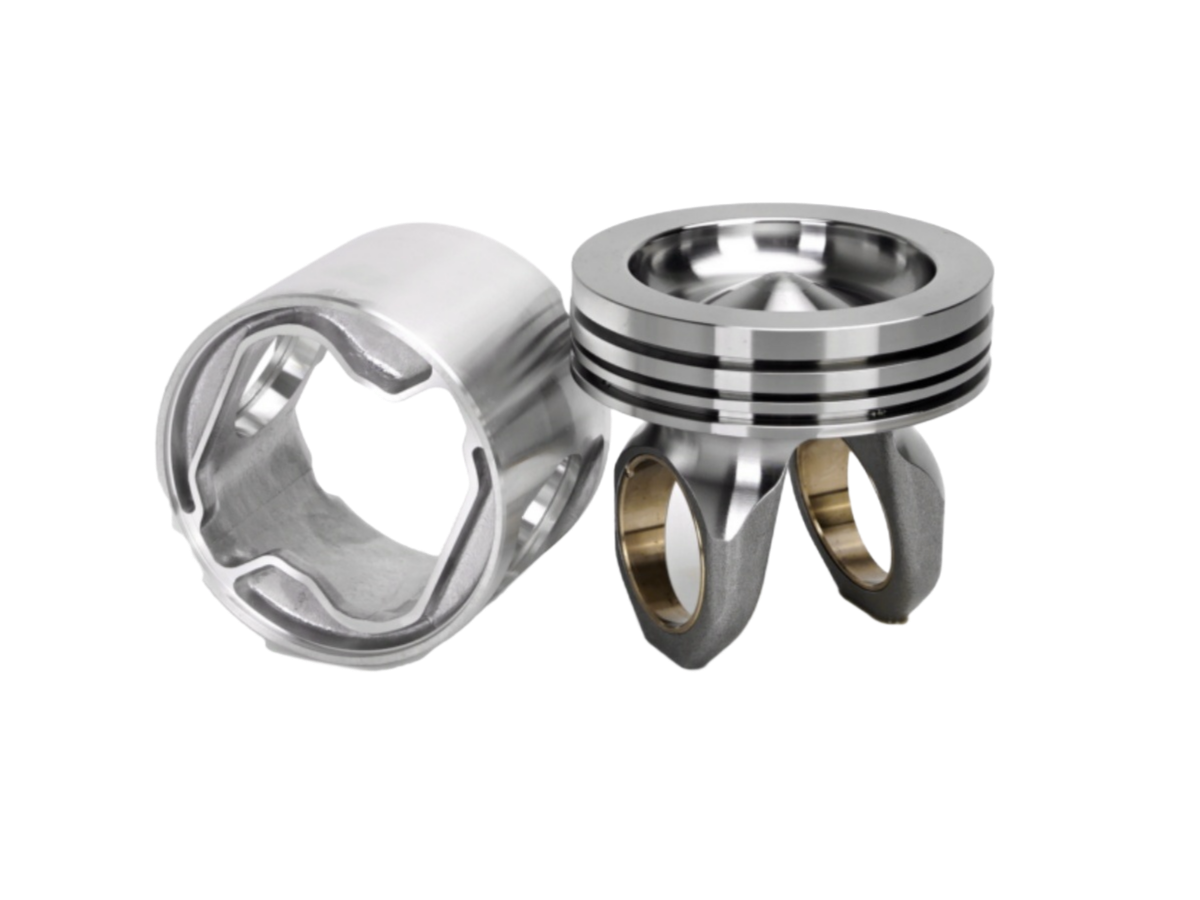
▪ Articulated piston: the crown and the skirt are two separate parts joined by a common piston pin, allowing slight relative movement.
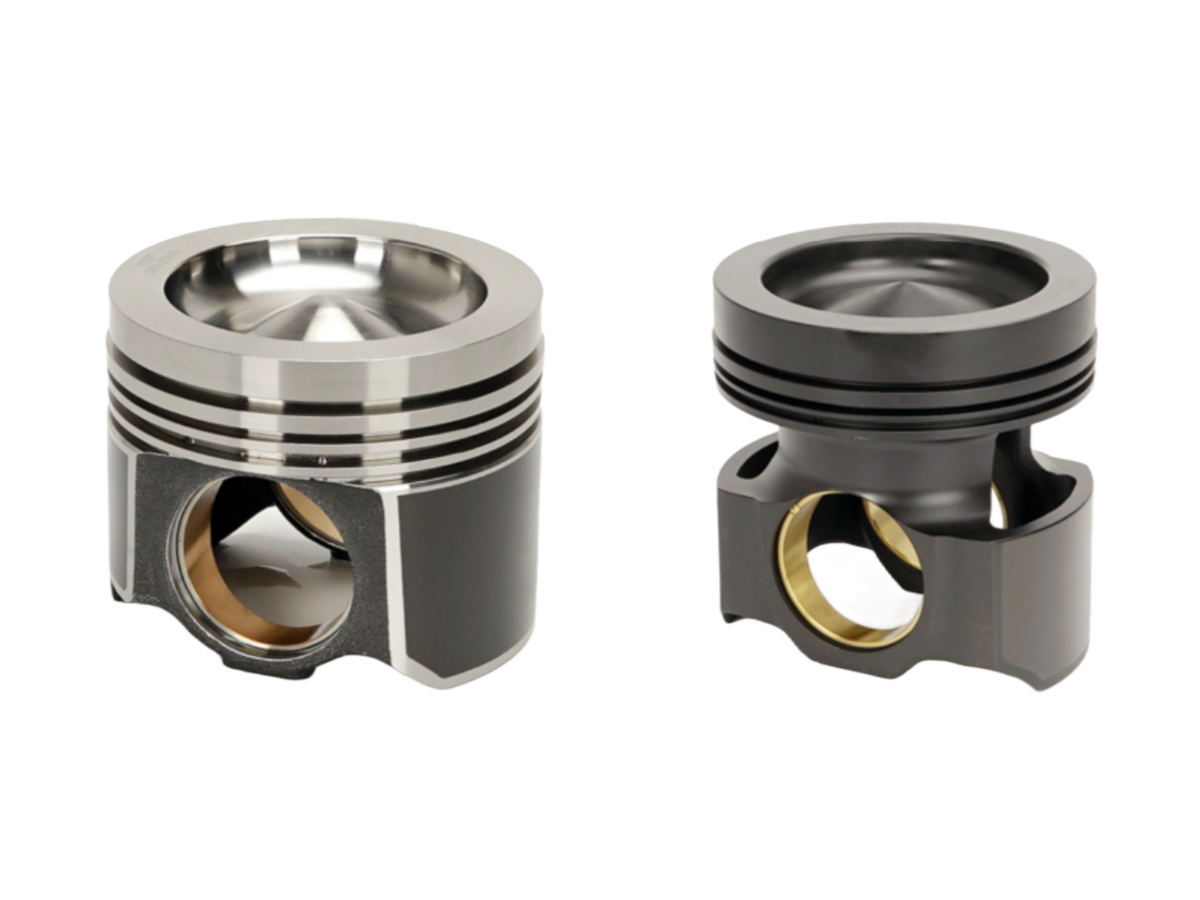
▪ Monobloc piston: the crown and the skirt are forged into a single metal body — with no joint.
02 Three Problems of the Articulated Piston
The articulated design uses different materials to meet the crown's high-temperature needs and the skirt's guiding needs. The intent is sound, but because it is made of two parts, it brings three problems that are hard to avoid.
2.1 Complex Structure: Lower Reliability and Poorer Cooling
The articulated piston consists of a crown and a skirt hinged on a common piston pin. This complex structure directly leads to two problems:
First, lower reliability. With more parts and more interfaces, the structure is prone to loosening and fretting wear under long-term vibration and alternating loads; reliability is inherently limited.
Second, poorer cooling. The internal cooling gallery must sit just below the crown — the hottest region — and remain fully sealed. In this structure, the joint interrupts the gallery, so the oil path cannot be closed throughout; cooling becomes less effective and adds to the thermal load on the piston.
2.2 Weak Skirt Material, Prone to Wear and Cracking
The skirt of an articulated piston is usually made of aluminium alloy. Aluminium is inferior to steel in tensile strength, wear resistance and high-temperature resistance. Under high heat and reciprocating friction, it tends to wear and crack, and in severe cases may directly lead to engine failure.
03 Advantages of the Monobloc Piston
Once the crown and the skirt are forged into a single metal body, performance improves in 3 respects:
- The gallery is closed completely. The internal cooling gallery runs continuously through crown and skirt; the return path has no joint, so the risk of leakage is removed at its source.
- A simpler structure, higher reliability. A single monobloc replaces the two-piece combination of crown and skirt, removing the risks of loosening and fretting wear.
- The skirt resists wear better. The forged steel skirt, locally hardened on its guide surface, is hard and wear-resistant and keeps its guiding shape and clearance stable over long service. In an articulated piston, the skirt relies on the joint for positioning; once the joint loosens, the clearance changes and wear accelerates. The monobloc skirt is therefore superior in both wear resistance and dimensional stability.
Taken together, the monobloc holds its compression height, its gallery and its skirt clearance throughout the service life, with dimensional stability and consistency clearly better than the articulated design.
04 Forming Routes of the Monobloc Piston
There are two routes to a monobloc, and they are not equivalent.
Insert pressing(Figure 3): a steel insert is pressed into the joint to seal the oil gallery. The method is simple, but it has a weakness — the insert is a separate piece of a different material, located exactly at the hottest point of the piston. The two materials expand differently under high temperature, and the insert is only held by the press fit rather than being one piece with the piston, so under sustained heat it can loosen and crack. This makes it a weak point in reliability.
Separate forging + welding(Figure 4): the crown and the skirt are forged separately, a half groove is machined into each mating face, and once the two are welded together the weld closes the gallery — metal joined to metal, with no insert and no third material.
Of the two routes, the welding route produces a same-metal joint with continuous structure and higher reliability, better suited to a monobloc that pursues long life and high reliability 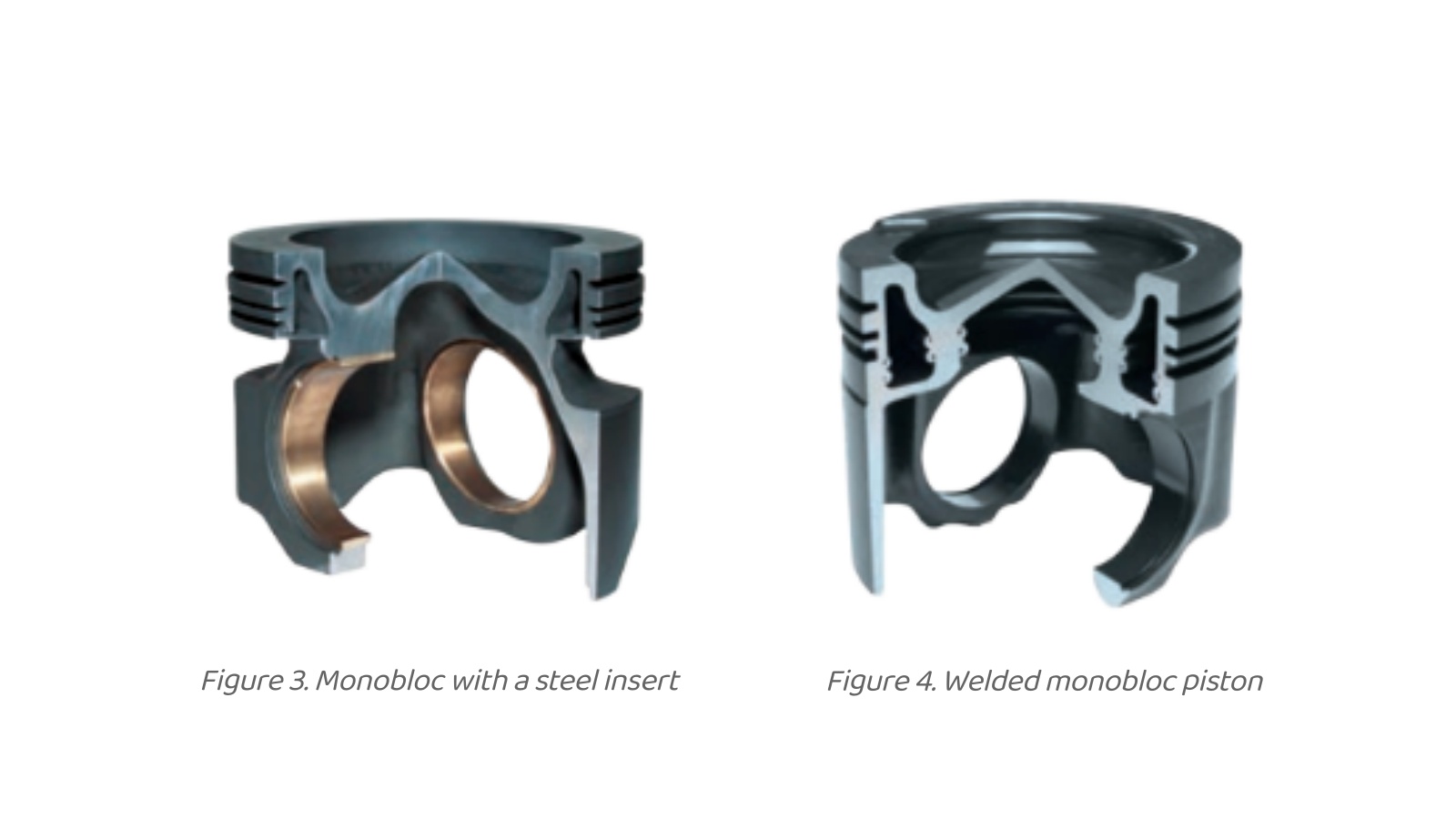
05 From Two Pieces to One: Our Capability
Converting an articulated piston to a monobloc is not a simple part swap but a leap in process capability. We adopt the separate-forging + welding route: the crown and the skirt are forged separately, a half gallery groove is machined into each face, and welding closes the gallery — a metal-to-metal joint with no third material. This mature process delivers reliable joints and stable dimensions, giving us the complete capability to systematically convert articulated pistons to monoblocs.
.
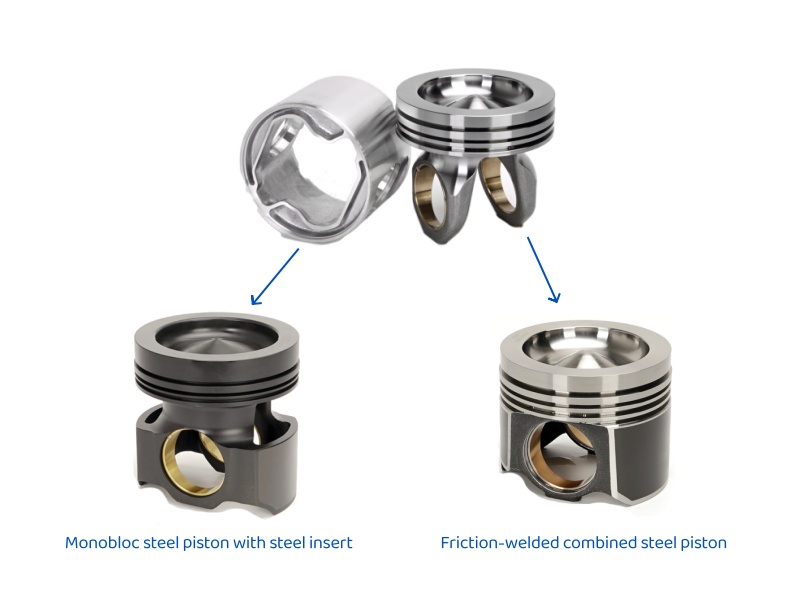
Figure 5. The insert route and the welded route
06 Conclusion
The articulated piston is a transitional solution; the monobloc is the inevitable trend and is gradually replacing it. With higher reliability, better cooling and longer life, the monobloc has become the mainstream direction of modern pistons.
DLC-Coated Piston Rings: Lower Friction, Longer Engine Life


